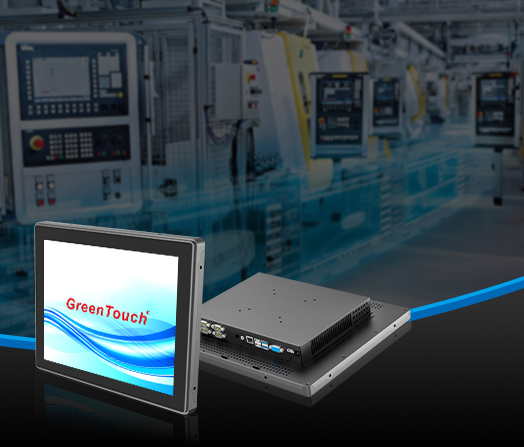
The certification system for industrial touchscreens centers on four key dimensions: safety, environment, quality, and networking. These certifications are not only mandatory legal requirements for market access but also serve as the core foundation for ensuring the stable, reliable, and safe operation of equipment in industrial settings, directly impacting production line continuity, personnel safety, and data security. The following is an analysis of common certification categories for industrial touchscreens and their core value:
I. Safety Certification: The Core Prerequisite for Market Access
Safety certification focuses on core requirements such as personal safety and protection against electrical hazards and fire. It is a legally mandated certification in most regions worldwide and is a prerequisite for products to enter the corresponding markets.
- CE Certification (EU): As a mandatory certification for products entering the EU and European Free Trade Area markets, it serves as the product’s “market access passport.” It verifies that the product complies with EU Health, Safety, Security, and Environment (HSSE) directives, covering key indicators such as electrical safety and mechanical safety.
- UL/cUL Certification (North America): A core safety certification for the North American market (U.S. and Canada), it focuses on a comprehensive assessment of fire and electric shock risks associated with electrical equipment. Certified products demonstrate compliance with North American standards for electrical safety protection.
Core Value: These certifications represent the “red line” for market access. Products that fail to obtain certification are strictly prohibited from being sold, distributed, or used in the corresponding regions; failure to comply constitutes a violation of the law. Additionally, these certifications effectively prevent personal injury and property damage caused by electrical safety hazards.
II. Environmental and Reliability Certification: Key Assurance for Industrial Applications
Industrial environments often involve harsh conditions such as dust, humidity, and extreme temperatures. Environmental and reliability certification primarily verifies a product’s ability to operate stably under complex operating conditions, preventing equipment failures caused by environmental factors.
- Ingress Protection (IP) Rating: A core metric for assessing a product’s resistance to water and dust. Common ratings for industrial touchscreens are IP65 and IP66. IP65 provides complete protection against dust and water jets, while IP66 offers complete protection against dust and powerful water jets, directly determining the product’s suitability for dusty and humid environments.
- IECQ/CECC Certification: An internationally recognized quality and reliability assessment system for electronic components. It focuses on verifying a product’s “survivability” under extreme conditions such as temperature, humidity, and vibration, ensuring stable component performance and preventing equipment crashes or failures caused by environmental stress.
Core Value: Ensures the long-term stable operation of industrial touchscreens in harsh industrial environments, prevents equipment failures caused by dust ingress, water ingress, and extreme temperature and humidity, guarantees continuous production line operation, and reduces downtime losses.
III. Quality Management System Certification: The Core Measure of a Manufacturer’s Quality Control Capabilities
This type of certification does not target individual products but focuses on the manufacturer’s quality management system. It serves as the core basis for evaluating a company’s production control capabilities and the consistency of product batches.
- ISO 9001 Quality Management System Certification: A globally recognized quality management standard. Obtaining this certification signifies that the manufacturer has established a comprehensive quality control system covering the entire process—from raw material procurement, production and processing, and inspection before shipment to after-sales service.
Core Value: Helps downstream enterprises screen for reliable suppliers, ensures stability and consistency across batches of industrial touchscreen products, achieves a “consistent quality across thousands of units” standard, and reduces the risk of production line failures caused by product quality fluctuations.
IV. Cybersecurity Certification: A Critical Barrier for Industrial Control System Security
With the widespread adoption of the Industrial Internet of Things (IIoT), industrial touchscreens—as human-machine interface terminals for industrial control systems—face security risks such as cyberattacks and data breaches. Cybersecurity certification has thus become critical to safeguarding the security of industrial control systems.
- IEC 62443-4-2 Certification: The current core standard in the field of industrial control system cybersecurity, it sets clear requirements for the cybersecurity capabilities of industrial control products, including core functions such as authentication, encrypted communication, access control, and vulnerability protection.
Core Value: Effectively defends against cybersecurity threats such as hacker intrusions and malicious attacks; prevents production line shutdowns and the leakage of critical production data (such as formulas and process parameters) caused by terminal breaches; and ensures the integrity and security of industrial control systems.

 Español
 Portugues
 Pусский
 Français
 한국어
한국어 العربية
 中文
中文